What a timing belt is, and why it matters
By Tagwell Auto · Last updated October 10, 2026
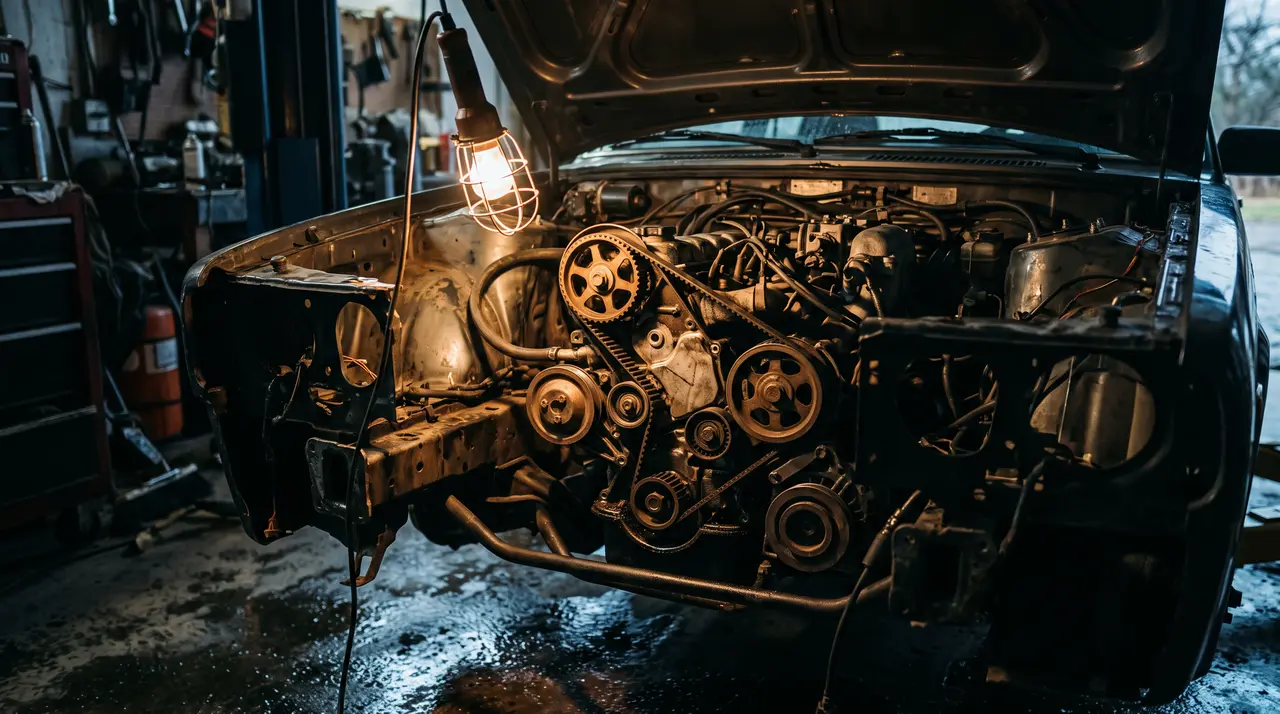
The short answer: a timing belt is a toothed rubber belt that keeps the engine's valves opening at the right moment. It wears out with age and miles, it gives no warning, and on many engines a snapped belt destroys the engine. Change it on schedule, usually every 60,000 to 100,000 miles or 7 to 10 years.
These are typical numbers, not your vehicle's own schedule. Your owner's manual wins.
This is one interval where the exact number for your engine really matters. Look it up.
Belt or chain?
Not every engine has a belt. Many use a metal timing chain, which is meant to last the life of the engine. Your owner's manual says which you have. If the maintenance schedule lists a timing belt replacement, you have a belt.
Why a break is so costly
In an "interference" engine, the valves and the pistons share the same space at different moments. The belt is what keeps them apart. If it snaps, they hit each other. Bent valves and damaged pistons often cost more to fix than an older car is worth.
When to change it
| Your situation | What to do |
|---|---|
| The manual gives miles and years | Go by whichever comes first. Rubber ages even when the car sits |
| You bought the car used with no record | Assume it hasn't been done, unless there's a receipt |
| Severe use: heat, cold, dust, short trips | Use the shorter interval in the manual |
What to ask the shop for
- The full kit: belt, tensioner and idler pulleys
- The water pump too, if the belt drives it. The labor is the same job
- The receipt, with the date and the mileage
Keep that receipt. A buyer will ask for it, and it's worth real money at sale time.
Is there any warning?
Usually not. Some engines tick or run rough when the belt has stretched, but most belts look fine right up until they break. That's why this job goes by the calendar and the odometer, not by how the car feels.
General guidance. Typical intervals, and your owner's manual wins. If a red warning light is on or the car drives differently, stop safely and get help.
Related: Miles and maintenance in Tagwell Auto
Track this automatically in Tagwell Auto
Tick "Timing belt" when you add a vehicle and Tagwell Auto tracks the replacement by miles and years, whichever comes first, and keeps the receipt with it.
Questions
How often should a timing belt be replaced?
Usually every 60,000 to 100,000 miles or 7 to 10 years, whichever comes first. Check the exact interval for your engine.
What happens if a timing belt breaks?
The engine stops at once. On an interference engine the valves and pistons collide, which often ruins the engine.
How do I know if my car has a timing belt or chain?
Check the maintenance schedule in your owner's manual. If it lists a timing belt replacement, you have a belt.