How to store a car, motorcycle or boat for winter
By Tagwell Auto · Last updated October 10, 2026
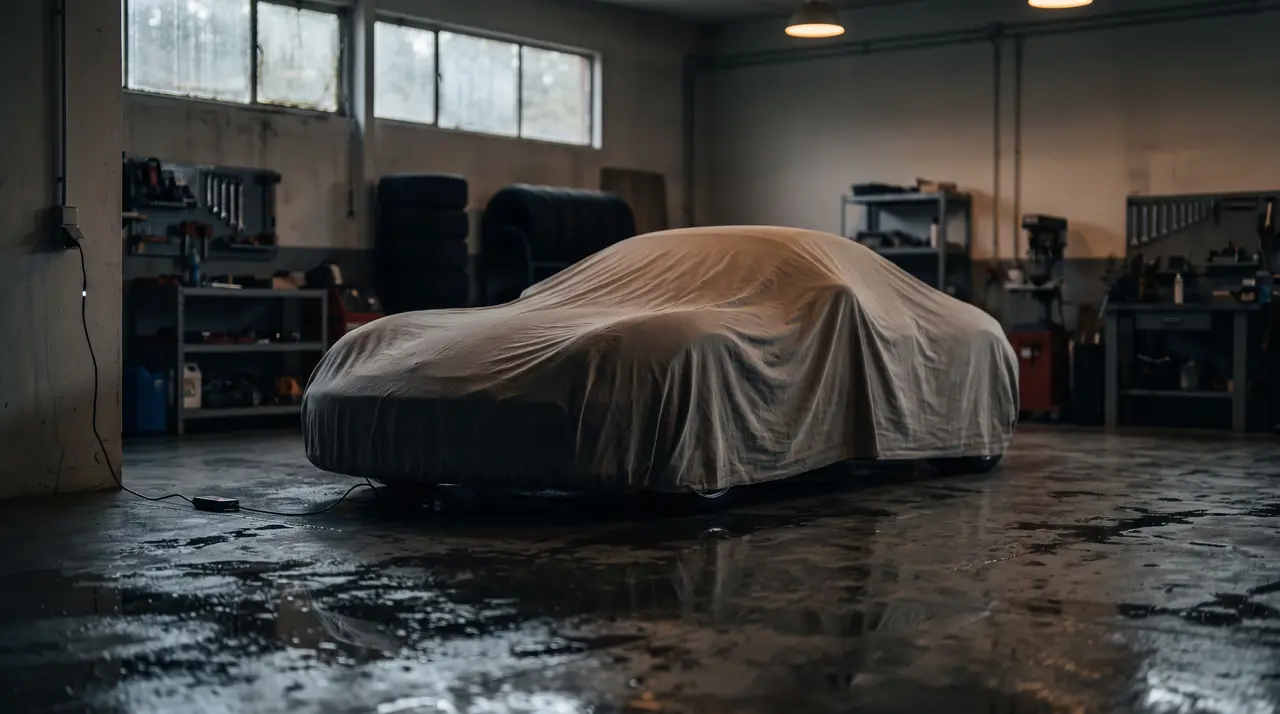
The short answer: fill the tank and add fuel stabilizer, change the oil, put the battery on a tender, pump the tires up, keep pests out and cover it. An hour of work in the fall saves a hard spring.
These are typical numbers, not your vehicle's own schedule. Your owner's manual wins.
The checklist for anything with an engine
- Wash and dry it. Dirt and salt left on over winter mark the paint.
- Fill the fuel tank and add stabilizer. A full tank leaves less room for moisture. Run the engine a few minutes so treated fuel reaches the whole system.
- Change the oil if it's due soon. Used oil holds acids and water you don't want sitting in the engine.
- Look after the battery. Connect a battery tender, or disconnect the negative cable.
- Protect the tires. Pump them to the top of the range on the door placard. For long storage, move the vehicle a little now and then.
- Keep pests out. Block the exhaust and the air intake with something you'll remember to remove. Leave no food inside.
- Release the parking brake and use wheel chocks. Brakes can stick on over months.
- Cover it with a breathable cover. Plastic sheeting traps damp.
Motorcycles
- Clean and lube the chain before it sits
- Get both wheels off the ground on stands if you can
- A battery tender matters most here. Small batteries go flat fast
Boats
- Drain every drop of water from the engine and the systems, or run antifreeze made for it through them. Water that freezes cracks blocks
- Change the lower unit gear oil, and look for milky oil, which means water got in
- Fog the engine if the maker says to
- Take the drain plug out and store the boat bow up
Winterizing steps differ a lot between engines. Follow the maker's procedure.
Electric vehicles
Check the manual: most makers suggest storing between about 50% and 70% charge, not full and not empty, and some say to leave it plugged in. The small 12V battery still needs watching.
In the spring
- Remove anything you used to block the exhaust and intake.
- Check tire pressure, fluid levels and under the vehicle for leaks.
- Reconnect the battery.
- Test the brakes at walking speed before you drive off.
General guidance. Typical intervals, and your owner's manual wins. If a red warning light is on or the car drives differently, stop safely and get help.
Related: Records and resale in Tagwell Auto
Track this automatically in Tagwell Auto
Tagwell Auto brings up seasonal jobs in the right season, and storage mode holds the mileage reminders until the car comes back out.
Questions
Should I start a stored car now and then?
Only if you can drive it long enough to warm it fully. A short idle makes more moisture than it burns off. A battery tender is the better answer.
Do I need fuel stabilizer?
For storage over a month or two, yes. Gasoline goes stale and can gum up the fuel system.
Should I store an EV fully charged?
Usually not. Most makers suggest somewhere around 50% to 70% for long storage. Check your manual.